How Singapore builds it multiracial society - What element is transferable?
- Diep Chi Dau Nguyen

- Aug 1
- 8 min read
Updated: Aug 4
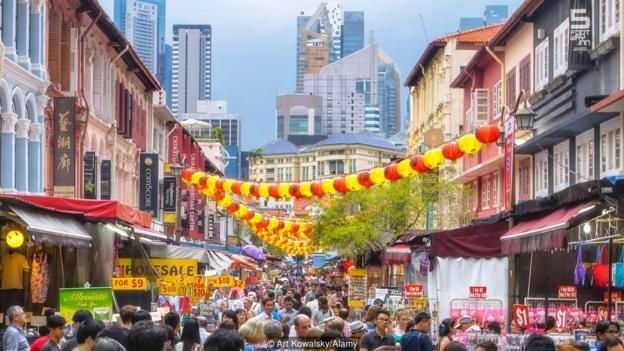
Within the context of increasing globalization, racial and cultural dilemmas have become more poignant and perverse. As many countries witness an increasingly mixed population, societal unrest, and discrimination against diversity have sparked polarization and racial riots. There are varying concerns over the dilution of unique cultures as English becomes the leading language in many countries, jeopardizing linguistic diversity. This raises the alarm for policymakers to mediate and compromise conflicts among people from different cultural and racial backgrounds.
Singapore, long renowned for its pot of multiracial and multicultural society, poses a prominent case study. It has maintained an interventionist approach to social engineering during the early days. Some notable policies, such as the Ethnic Integration (EIP) and the Bilingualism Policy, have persisted and continue to encourage the reception of individuals. However, the transferability of these policies rests on state capacity, where strict state capacity means the policy can hardly be replicated elsewhere. Other policies are transferable as they cultivate habits, so they are adaptable in other societies.
The arrival of Sir Stamford Raffles from the British East India Company in 1819 marked the start of Singapore’s modern history. Sir Raffles then devised the town plan and created ethnicity-based districts and residential areas: the Chinese lived in Chinatown, Kampong Glam, and Geylang Serai, which were home to Malays, while Indians settled in Serangoon and Sembawang. Living in segregated areas had polarised Singapore into different, singular clusters where social cohesion was virtually non-existent. Without interracial interactions and cooperation, prejudice took root, whereas national identity and people’s sense of belonging were lacking severely.
After the merger with Malaysia in 1963, the lack of a shared national identity left the newly merged society susceptible to political manipulation and racial tension. Between the 1950s and 1960s, racial riots and violent unrest were rampaging almost everywhere. These traumatic experiences with racial divisions were one of the major reasons for Singapore to be separated from Malaysia: Singapore pursued a multiracial nation, which threatened Malay dominance. Hence, post-independence leaders determined that multiracial harmony cannot be left to chance. Racial harmony was enshrined in the Constitution and has since become the long-standing guidelines for the first and regularly revised policies of today.
Laying the foundation for race-oriented policies
Dismantling racial enclaves was one of the new Singaporean government’s first steps to build social cohesion. Following the efforts of resettlement and public housing programs, the Ethnic Integration Program (EIP) was formally introduced on March 1, 1989. The EIP set a limit on the number of households of each race in each neighborhood and block based on the ethnic makeup in Singapore. When a limit is reached, no further allocation of flats to the ethnic group will be allowed.
The implementation of this policy was a response to the increasing demand for Housing Development Board (HDB) public housing during the 1980s. The EIP was then established to (1) prevent the rise of enclaves, (2) give residents more opportunities to interact with other races daily. No longer are Malay enclaves in Tampines or almost Chinese-only Hougang areas. Then, people of various ethnicities could be found residing on the same floor, in the same neighborhood, and in the same building. Until now, its relevance remains steady or increases, even when 80% of Singaporeans reside in HDB flats. This further highlights the pressing significance of social mixing to engender interracial chance interactions and racial tolerance in the increasingly diverse Singapore. Along with a strong sense of neighborliness cultivated through the years, residents have become more receptive to one another’s customs and traditions.
However, this EIP may only apply to Singapore, considering its unique history and geopolitics. With limited land resources, citizens are encouraged to reside in public housing to minimize land use, thus explaining why the majority live in flats. Moreover, its historical context, tied with racial tensions and racial conflicts with the equivalent solution, emphasizes race-based policies to resolve race-related issues. This division based on races and ethnicities is, contrastingly, classified as discrimination in the field of access to services like housing, listed in the Directive 2000/43/EC by the European Commission. Applying Singapore’s race-based policy may result in backlash and backfire on the European authorities’ efforts to maintain a cohesive social fabric.
Additionally, there is a stark difference between the portion of the population residing in public housing in Singapore and European nations. While nearly 80% of Singaporeans are flat owners, social housing represents close to 28 million dwellings and accounts on average for 7% of the total housing stock in the OECD (8% in the EU). This means that European leaders have much less control over social mixing and establishing quotas than the Singapore government does when the majority prefers private housing. Any interference with privately-owned estates may be considered a breach of civil liberty and private property rights, inciting backlashes from citizens
.
Lastly, financial barriers facing homeowners hinder the EIP application in Europe. The EIP in Singapore has faced criticism in recent years over the economic disadvantage it places on minority homeowners. When the ethnic quota for a block or neighborhood is reached, owners belonging to a specific race can only sell their HDB flats to buyers of the same race. For example, if the quota for Chinese residents is met, the minor groups (MIO - Malay, Indians, and Others) can only sell their flats to people from either M, I, or O groups. Additionally, there may be price differences offered by potential Chinese buyers as compared to buyers from the minorities. This causes homeowners to face forced pricing discounts, longer selling times, and higher costs for upgrading their infrastructure, given the small pool of potential buyers. The Singapore government recognizes this issue and has introduced the EIP buyback assistance scheme in 2022, in which sellers can sell their flats back to HDB at market prices. However, there are concerns over the stringent prerequisites for sellers to appeal, including at least ten years of ownership of their flats and a minimum of six months on the market. Financial burdens on minority group homeowners persist, although they are alleviated by the HDB.
Meanwhile, many European countries are facing a severe housing crisis, characterized by severe affordability and access issues. In the EU, house prices witnessed a 60% increase on average since 2015, while one in ten Europeans struggles with paying the mortgage on time. Housing shortages are also a prominent issue in Europe, with a large gap between supply and demand. The EU needed 2.25 million additional housing units in 2025, which was 50% more than the number of homes being built (European Investment Bank). This imbalance of the supply and demand of housing poses a challenge in reselling houses or flats to other people, when prices are driven up significantly. Besides, housing stock in tourist destinations has been diverted away from residents for short-term rentals, adding more pressure to the problem. Given these constraints, European housing policy has instead relied on income-based allocation rather than racial engineering. Hence, Europe’s economy-oriented policies in housing may not adapt to Singapore’s race-based approach. For an ongoing and systemic crisis, a state-funded buyback safety net is hardly applicable to resolve affordability issues.
Social integration through education: the Bilingual Policy
Beyond housing, Singapore’s nation-building has extended into classrooms. English has been mandated as Singapore’s first language, primarily used in administrative to educational purposes. This is to ensure ethnic neutrality, for the dominance of one ethnic language over others may risk alienating minority groups. However, there exists the need to preserve Asian roots and traditions through language, hence prompting the implementation of bilingualism. Made compulsory in 1966, the bilingual policy mandates the learning of English and another local language (from the three official languages: Chinese, Malay, and Tamil), commonly referred to as ‘mother tongue languages (MTLs).’ Hence, despite using English to promote economic growth and trade, the government ensures a fair and equitable treatment of all languages to preserve a strong sense of identity.
However, juggling various identities simultaneously poses a challenge to the linguistic balance that Singapore is trying to maintain. While this policy aims to enhance students’ appreciation of traditions, many students consider MTL as wholly academics required to pass exams rather than living languages. Some find MTL lessons challenging, which causes the intake of cultural and linguistic knowledge to be inefficient. Adding to this is the lack of time allocation for MTL subjects in schools and the almost frequent use of MTL in schools alone. At home, English is the predominant communication medium in many households. Research from MOE in 2019 shows that English was spoken the most in 71%, 67%, and 70% of the Chinese, Malay, and Indian households, respectively. This further entrenches the conception that MTL holds little importance compared to English. The dearth of exposure to MTL undermines students’ appreciation for the languages and the cultures and students’ MTL knowledge.
Regardless of the shortcomings, bilingual policy will continue to be the cornerstone of Singapore's education system and a method to preserve national identity. That the official languages are still taught and actively used, reinforced by state-backed campaigns and community programs rather than the classroom alone, shows real resilience against the pull toward English. This gives Taiwan, pursuing its own 'Bilingual 2030' policy, a concrete model to study as it seeks to expand English proficiency without eroding local languages. . This initiative expands to two key areas: bilingualizing Taiwan’s government services, laws and regulations, and the living environment; enhancing English proficiency in schools throughout. However, critics raise concerns that English may be allocated more time than local languages, diluting Taiwan’s own language, such as Mandarin, Hokkien (Taiwanese), and Hakka.
Sharing similar sentiments as Singapore, Taiwan, new to the widespread adoption of English, can consider some policies from Singapore. Taiwan is currently facing some problems with the curriculum consistency, a lack of resources, and low quality of “bilingual” instruction. Due to the lack of resources, the bilingual curriculum cannot be implemented for all grade levels, disrupting students’ language proficiency. Taiwan also implements the compulsory learning of MTLs, in which students from primary to high school have to choose one official national language irrespective of their ethnic backgrounds. Taiwan also faces another issue of mother-tongue learning during classes and reduced learning hours of English due to the 12-Year Basic Education Curriculum Guidelines in 2019. The imbalance of grasping both foreign and national languages may reduce students’ sense of identity with their roots, while struggling to immerse in globalisation. According to surveys from 2020 to 2025, the percentage of Taiwanese speakers had reduced from 55.94 percent to 51.42 percent, reflecting the challenges to language continuity.
With these similar problems, Singapore’s bilingual policy succeeds as language extends beyond schools through community-led campaigns and family support programs. “Speak Mandarin Campaign” and “Speak Good English Movement” are the most prominent programs that actively push the use of bilingualism in daily life. The former organizes friendly activities, storytelling sessions, and workshops that encourage the constant use of Mandarin so citizens can remain in touch with their mother tongue. Meanwhile, the latter initiative drives proper English usage to reinforce English proficiency. Simultaneously, there are programs such as the Lee Kuan Yew Fund for Bilingualism that subsidise community groups with engaging MTL materials and interactive media. Government pushes this further by establishing Mother Tongue Language Learning and Promotion Committees (MTLLPCs), which initiate making language learning interactive and less exam-focused. Indeed, Singapore is facing the rising dominance of English nowadays, but has relatively maintained its multilingual societal fabric. According to the 2020 Population Census, 82.8% of the Malay population is literate in both English and Malay; 62.3% of Chinese residents are literate in both English and Chinese. The figures demonstrate Singapore’s meticulous effort in promoting both foreign and local languages through more hands-on exposure, despite English dominating at home, a feature Taiwan is lacking in, and which it can consider.
The case of a multicultural and multiracial Singapore is built upon structured social engineering during its foundational years and persistent efforts across its history. The EIP may only be applied in Singapore because the state owns and allocates roughly 80% of the housing stock. This degree of control proves improbable in other governments, especially in Europe, without breaching property rights and anti-discrimination laws. Bilingualism policy, however, is transferable for its mechanism of keeping learning languages alive outside the classroom, which can support the implementation of bilingualism in other countries. Taiwan’s Bilingual 2030 policy can borrow the models of state-funded programs and dedicated funds to promote multiculturalism in the growing globalization.
The lesson for policymakers, then, is not about entirely copying Singapore. Rather, there should be careful considerations of the state capacity and structure. Should the capacity be structural, as with the EIP, imitation may risk failure or backlash. However, if it is a sustained individual investment, as with bilingual education, other multicultural societies can rely on the template to adapt to their unique circumstances.



Comments